By Boniface Keakabetse
Environmental concerns are mounting around ReconAfrica, a Canadian oil exploration company whose activities in Namibia have previously raised alarm over the future of the Okavango Delta—a critical ecological and hydrological system in southern Africa.
Now, the company has extended its operations to Angola, where it has signed a Memorandum of Understanding (MOU) with Angola’s National petroleum agency, Agência Nacional de Petróleo, Gás (ANPG), to explore gas reserves in the Etosha-Okavango basin.
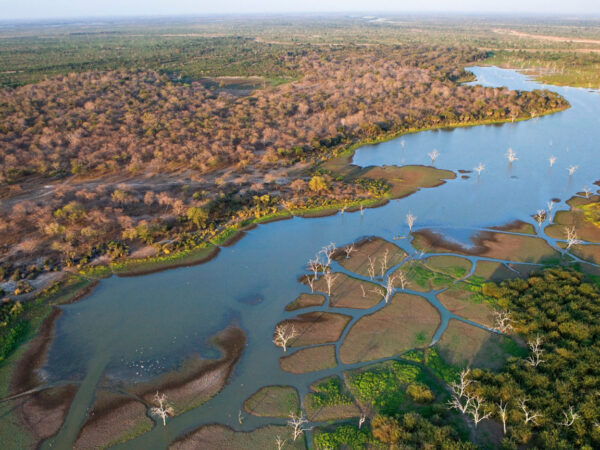
The Etosha-Okavango basin lies in southeastern Angola and forms the upper catchment area of the internationally significant Cubango-Okavango River Basin (CORB), a transboundary water system shared by Angola, Namibia, and Botswana. The basin supports diverse ecosystems and millions of people who depend on its water supply.
Environmental activists have raised urgent concerns over the potential ecological impacts of industrial oil and gas exploration in Angola’s portion of the basin.
Erica Tavares, co-founder and Technical Coordinator of Eco Angola, sounded the alarm during a recent workshop focused on the sustainable management of the Cubango-Okavango system in Maun.
The three-day workshop, organized by the Okavango River Basin Water Commission (OKACOM), brought together experts from Angola, Namibia, Botswana, and international partners to collaborate on protecting biodiversity and ecosystem values in the basin.
Tavares highlighted that many stakeholders in Namibia and Botswana remain unaware of ReconAfrica’s advancing operations in Angola. She stressed the risks that oil and gas exploration pose to the entire basin’s future and urged increased regional awareness and cooperation.
“We want to talk to everyone sharing this basin and raise concerns about what is happening in Angola,” Tavares said. “If this develops unchecked, it could have massive repercussions for the whole system and the three countries that depend on it.”
In addition to the MOU with ReconAfrica, Angola has signed another with China’s Xuan Thien Group (XTG) to further oil and gas exploration in the basin, intensifying activist wariness.
Tavares noted that while Angola’s portion of the basin currently experiences limited industrial development—mostly community-level mining, small-scale agriculture, and plantations—planned large-scale exploration presents a new threat to the delicate ecosystem. Unlike Botswana’s Okavango Delta, a UNESCO World Heritage Site receiving international conservation support, the basin’s headwaters in Angola lack formal protection, making them more vulnerable.
“Protecting the water source in Angola is crucial because the Okavango Delta’s future depends on the health of this upper catchment area,” Tavares emphasized. “We are engaging with government counterparts and raising awareness locally about the ecological and social impacts that gas and oil exploration could bring.”
As ReconAfrica’s footprint grows across borders, the call for transnational collaboration to safeguard the Cubango-Okavango basin’s ecological integrity intensifies. Stakeholders warn that without stringent environmental oversight and cooperative regional strategies, the entire basin—and the millions it supports—could face significant environmental degradation in the years to come.